Arrows of light pierced paper, pages became holograms, and [Nelsa’s] silver hair escaped its tortoise shell comb to halo her face. Her favorite people, Frida Kahlo, Diego Rivera, and Leonardo da Vinci came alive.
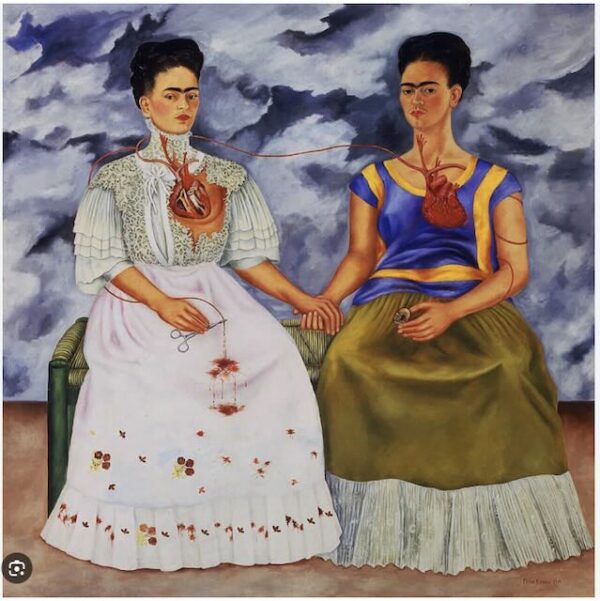
“You really have them going with that Mona Lisa,” Frida chided, taking a long drag from her cigarette. “They are still talking about that stupid smile. But I don’t care for it. I know what smiles can hide. I want to see her heart, Leo. What is in her heart?”
Leonardo was dismissive. “My patrons did not commission portraits of human hearts. I leave that ugliness to Bosch. He knew it in exquisite detail. I prefer beauty.”
“Even when it is a lie?” Frida challenged.
“Is beauty ever a lie? I don’t think so. You are angry, Frida. I see your anger in your work.”
“How can you create a heart without blood? Your paintings have no soul.”
“I am not interested in the soul. I am interested in science.”
“Diego, talk to Leo about the soul,” she said to her husband. “He made science seem like such a gift. Tell him the truth of it.”
Diego Rivera winked at his crippled wife. “You want me to convince a five-hundred-year-old fag he was wrong about science?”
“Yes.”
“Leo,” Diego said, “you are wrong about science. It is not the glory of mankind. It makes slaves of us.”
Leonardo smiled wryly. He enjoyed provoking the fat Mexican know-it-all. “Your Frida would not be alive without machines, no? It is greed that makes us slaves, Diego, not science. Science is innocent.”
“You are idealistic, Leo,” Frida said. “Very idealistic.”
“Yes. I see that now.”
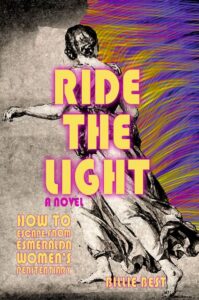
— Excerpt from Ride the Light: How to Escape from Esmeralda Women’s Penitentiary by Billie Best
~ : ~
I have long admired Frida Kahlo for how she channeled her suffering into art. She didn’t know how to hide her pain, so she worked with it and produced beautiful paintings. As a woman with a malformed uterus, I can relate to the resentment of living in an uncooperative body with a rebellious set of organs. Frida had polio as a girl and then when she was eighteen, she was in a bus accident that broke her bones and pierced her organs. She had many surgeries, even tried to get pregnant, but her body was not as strong as her mind. That idea intrigues me—the notion that our minds may be more powerful than our bodies. I see that in Frida’s work. I have tried to incorporate that observation into the characters in Ride the Light.
It’s important to me to tell stories of women who overcome their physical limitations with will power. Frida Kahlo didn’t stop painting when her body was broken. She sometimes painted on her back in bed, pushing forward with her attitude to make progress in her art form. Today she is famous for the uncompromising nature of her self-portraits. She chose to portray herself in weakness and in strength. I think that’s why her paintings inspire so many. Frida makes the connection between power and pain. Her art is light that gives us insight.


Just ordered my copy; can’t wait to get it. Judging from the reviews, it’s exceptional. 🙂