“Her kingdom for a kiss. That was the deal. Extreme, for sure. But she wasn’t going to wait until she was eighty for the immaculate conception of a man who was tidy AND kissed well. This man’s biochemistry was mixed up with hers now and there was no escape from the desire that whipped her pulse into whitewater. Plot twist! Her life story, the cranky feminist manifesto was morphing into a ripped bodice romance. Her religious commitment to style was being abandoned for utilitarian heresy. Or maybe she was just becoming more human.”
I wrote that more than a few years ago, and now I see the truth of it without equivocation. It’s a quote from “The Cohabitants,” a series of blog posts that I began releasing as a weekly series in 2026. Thank you for giving it such an encouraging response. Now I’m organizing the series into a book for submission to a disintegrating publishing industry.
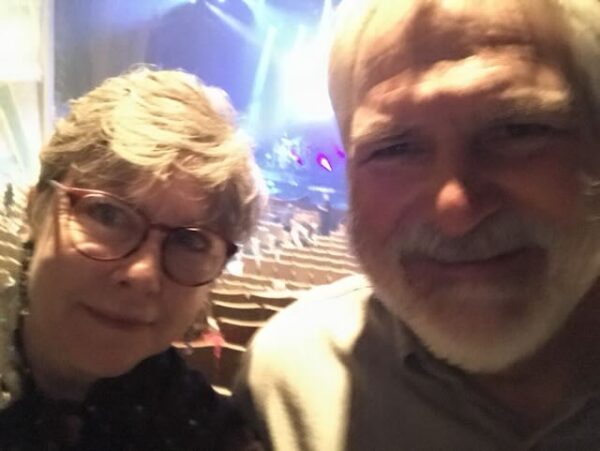
Meanwhile, my cohabitant is whistling, and I need to name that tune. This is what it’s like to try to write with that man in the house. I think the melody sounds like the theme music to a classic Western. I’m wrong, he says. The tune is “Knights in White Satin” by the Moody Blues. He is an exceptional whistler. Now I’m way off track mentally, listening to the melody and trying to think of the name of the movie it recalls. He switches to whistling the soundtrack of Clint Eastwood’s “Fist Full of Dollars” and, yes, that’s the melody I was thinking of. With his perfect pitch, he mashes up “Knights in White Satin” with the theme from “Fist Full of Dollars” into a seamless medley while he makes himself another cup of coffee.
Anyway. As I was saying, like all content factories, publishing is being crushed by technology that strips out individual creativity and replaces it with whatever is most predictably popular. Recommendation algorithms have taken over the book business just the way they have occupied our social media feeds. Books are reviewed on a thousand platforms and sold via a million retailers, and so the business is fragmented. The bots factor all online content about a book and excrete a content summary in search results. For those of us who remember the notion of a “paper of record” that was long established to render make-or-break reviews—The New York Times, The New York Review of Books, The New Yorker—that geographic dominance has ended. There is no media central to the success of a book. Not even TikTok. When it comes to success, there is no there there. The Emerald City has been invaded by private equity and stripped for parts.
I can’t concentrate because my cohabitant is talking to himself while he gets dressed for work, complaining about how rock lyrics are often meaningless bits of psychedelic poetry. Still, he remembers all the words.
Anyway. As I was saying. For authors who seek notoriety for good work, the business has changed. It’s a different dream. The product is changing. Diesel scarcity, affordability, and supply chain disruptions are pushing bookstores into the Blockbuster Video abyss. Paperbacks have a manufacturing and transportation problem. But for many of us, a book doesn’t come to life until we can hold the pages in our hands. Ebooks require a physical device, a phone or an e-reader, and adaptive tech skills. And ebook devices track readers as well as books. To make reading feel social, platforms promote reader engagement with comments, star rankings and reviews that provide data for algorithms. My new approach is to focus on Amazon and Goodreads because they offer readers a place to express their opinion, an invitation that makes the solitary act of writing feel social. Recommendation algorithms prefer those two platforms because they collect so much data. Like I said, it’s a different dream.
Thank you for reading, commenting, ranking and reviewing.
Now I am actively promoting “Ride the Light: How to Escape from Esmeralda Women’s Penitentiary” while I organize “The Cohabitants” into a book.
—
Here’s my working description: “The Cohabitants: a feminist, a fisherman & a dog”
A spicey memoir of midlife romance, part feminist manifesto, part love story.
There was no whispering, no sudden gush of feelings, no skin, no steamy logistics, not what they had experienced as teenagers. This wasn’t going to be a flash in the pan hook-up. They both knew at this stage in their lives there was no time for those kinds of mistakes. And thus, their pairing had the tedious pace of a Jane Austen novel, more like an arranged marriage than a lusty affair. Or so she thought at the end of their first date. Still, she can’t stop thinking about kissing him. She wants a pet man. Her dog likes him. But commitment is not on the menu. This relationship is going to be an indulgence, like shoplifting chocolate.
A true story written like a sitcom, THE COHABITANTS has the edgy feel of Harrison Ford’s character in SHRINKING as he embarks on a romantic relationship, showcasing the complexities of love later in life, and the excitement and challenges of new romance while the couple navigates aging and health issues together.
—
So that’s what I’m doing. Meanwhile, he’s singing “Letters are written, never meaning to send, but I love you, oh, I love you.” Then he’s out the door and off to work at a place that still requires his skills and attention. After all these years, he expected to be retired, but to state the obvious, the future isn’t what we expected. We have been together for six years. Three on a hill in the forest and three in this little house in suburbia. Our idealism has worn off with the friction of current events and living in these bodies. But we’re satisfied, engaged, he with his music and his boat and me with my books, co-creating ourselves, cohabitating gladly in a different dream.


