Now that she was settled in, she was making three meals a day for them. She didn’t mind grocery shopping and cooking. It was a routine she learned from her mother, and it suited her. Homemaking felt necessary. Like putting down an anchor. Especially during the pandemic. The simple pleasure of food was a reprieve from the drama of the day. It was creative, like writing, but absent the alphabet it gave her eyes a rest. On workdays, she packed him a sandwich for lunch to keep him from grazing the heat lamp tray at the mini mart. She was managing him.
Five or six days a week, the man left the house in the morning to do hot tub sales and service. He joked about his work as going off to the putty knife factory, something his mother used to say, but he liked it. He was jovial, hands-on, people oriented. Most days he drove to customer homes to solve problems. Sometimes he worked the show room doing sales. He had been doing the job for more than thirty years and he was an expert, had his hands on the mechanics until the tendons around his thumbs gave out. He knew the industry, the brands, and the legacy technology. Each day was different.
He was a fixer, not a desk person; would rather be crawling with the critters under someone’s deck than standing around the showroom in a clean shirt. Getting dirty meant something to him. It was real, specific, experiential. No corporate bullshit. Out on the road visiting homes, kneeling in a backyard, playing with a new dog, he was enjoying himself. Some days he had so much fun with the dogs it didn’t feel like work.
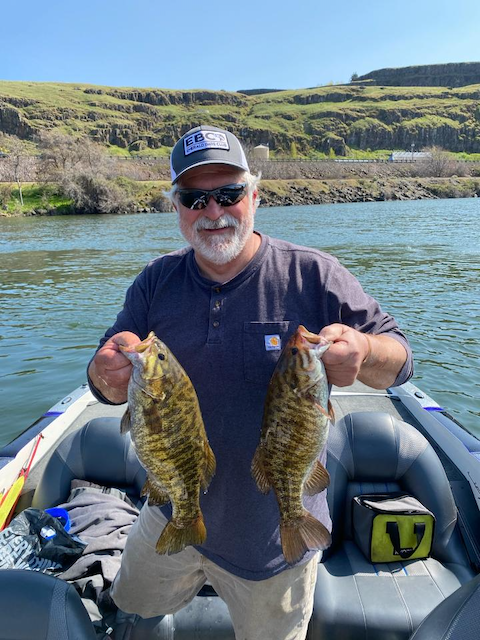
Watching him go to work in a t-shirt every day challenged her long held assumptions about class. During her days as a suit, she had looked down on people who got dirty for a living. Then she gave up the desk and started farming and got dirty every day herself. Now she was living with a man who got dirty every day and yet, he went to college longer than she did. He was a more proficient musician, knew more lines from Shakespeare and Sondheim. He grew up white collar, and so did his parents. But he found the indoor world stifling. Outside was where he wanted to be, a place where he could sing. That was enough for him. Singing, work and dogs, living on the land, caring for his patch, and fishing.
His existential dilemmas were about where the fish spawned and how to find them. He was interested in the way water moved from rivers to lakes, and how mountain runoff filled the reservoirs. He spoke of fishing in reverent tones. He took her to see his favorite fishing spots, explained how he could read the water to know what was beneath it, the topography of the bottom, the plants and the habitat. He referred to the water column as though it were a place to be. He was concerned about whether the government managed regional hydrology effectively and took steps to preserve the fish populations in his lakes, because those lakes belonged to him. The whole water system belonged to him. Those fish were his fish. They were out there waiting for him. Fishing was a union of souls, the catcher and the caught. And there was mercy. Catch and release.
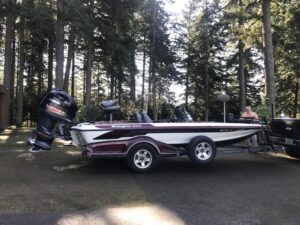
His boat was his trusty steed. He groomed her exterior and refined her performance to keep her in condition. On weeknights when he got home from work, he went to the garage and fussed over her electronics, aired her cavities and oiled her, traced her wires and checked her batteries. Grooming her relaxed him. Having her perfectly tuned gave him a competitive edge. He was proud of his boat.
That emotional attachment extended to the garage. It was a boat mechanic’s garage littered with tools, oil cans, sprays, tangles of cable and cutters, all frosted in black dust. When the woman peered into the man’s murky grotto, she shivered at the thought of what lurked there. Mostly, she stayed away. But she was curious. He was so laid back about his domestic world and so meticulous about his fishing expeditions. He spent hours in the garage preparing his gear, tying knots, and stowing supplies. The first time she watched him pack his truck for a fishing trip, she marveled at his organization skills applied with such specificity to fishing but seemingly abandoned once he stepped over the threshold into his house.
He looked at her watching him. “Can you back up a boat?”
“No.”
“But you were a farmer. You must have backed up a trailer.”
“I’m not going to help you with the boat.”
“Come on. Why not?”
“We don’t have that kind of relationship.”
“Don’t you want to learn how to fish?”
“No.”
He sighed. “It would really help me out if you could just learn to back up my boat.”
“It would really help me if you could learn to type.”
End of discussion.


Great shot of man w fish